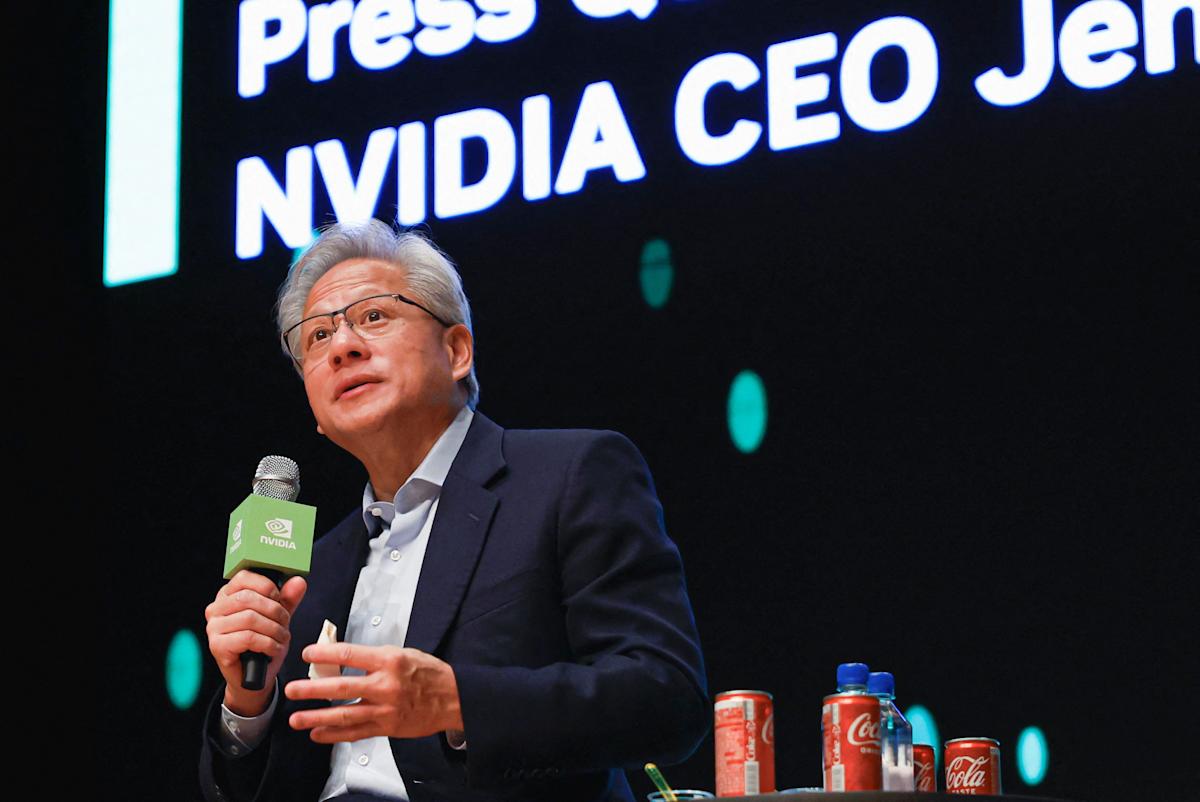
As the fourth quarter earnings season draws to a close, all eyes in the tech world are fixated on one behemoth: Nvidia. The artificial intelligence (AI) chip giant is set to report its Q4 results after the bell on Wednesday, in what is widely anticipated to be the most impactful announcement of the season. This crucial disclosure will not only reveal the company's recent financial performance but will also offer pivotal insights into the trajectory of the booming AI sector, making the nvidia earnings forecast a central point of discussion for investors and industry observers alike.
The anticipation is amplified by a confluence of recent developments, including the launch of Nvidia's groundbreaking Vera Rubin AI superchip at CES, the expansion of a significant multiyear deal with Meta, and the relentless drive by hyperscale cloud providers to build out their AI infrastructures. These factors paint a complex, yet exciting, picture of Nvidia's current standing and future potential, especially as the company prepares to host its annual GTC event in the coming weeks, a forum often used for major product and strategy reveals.
The Stakes are High: Anticipating Nvidia's Q4 Performance
Nvidia’s upcoming Q4 earnings report is not just another financial update; it's a bellwether for the entire AI industry. Analysts and investors are eager to see if the company can maintain its meteoric growth, fueled largely by the insatiable demand for its high-performance GPUs in data centers. The consensus among Bloomberg analysts projects a remarkable earnings per share (EPS) of $1.53 on revenue of $65.8 billion for the quarter. This represents a staggering year-over-year increase from the $0.89 EPS and $39.3 billion revenue recorded in Q4 last year, underscoring the explosive growth trajectory Nvidia has been on.
The vast majority of this growth is expected to originate from Nvidia's powerhouse data center business. Analysts forecast this segment alone to generate an astounding $60.2 billion in revenue for the quarter. This figure not only highlights the dominance of AI and high-performance computing but also solidifies Nvidia’s position as the indispensable architect of the modern AI revolution. While the company's stock has seen a modest uptick of just over 3% since the start of the year – a performance that, while positive, trails Intel's impressive 25% surge but outpaces declines from competitors like AMD and Broadcom – the Q4 report is widely expected to rekindle significant investor enthusiasm and validate its premium valuation.
Blackwell Ultra and the Future of Data Center Dominance
A key driver for this projected growth, and a critical component of the nvidia earnings forecast, is the anticipated impact of its next-generation chips, particularly the Blackwell Ultra. KeyBanc Capital Markets analyst John Vinh has highlighted that increasing shipments of Blackwell Ultra are expected to be a primary catalyst for strong results and robust guidance. The Blackwell Ultra is not merely an incremental upgrade; it represents a significant leap forward, carrying a 20% to 30% higher Average Selling Price (ASP) compared to its Blackwell predecessor. This higher ASP, combined with escalating rack shipments – estimated to reach just under 30,000 racks this year – points to a substantial boost in Nvidia’s data center revenue.
The strategic importance of chips like Blackwell Ultra and the recently unveiled Vera Rubin cannot be overstated. These superchips are designed to handle the increasingly complex and demanding workloads of AI models, from large language models (LLMs) to sophisticated simulations. Their enhanced performance, energy efficiency, and interconnectivity are crucial for hyperscalers building out vast AI factories. For investors, monitoring the commentary around Blackwell Ultra's ramp-up and demand signals will be crucial indicators of Nvidia's continued technological leadership and market capture. Furthermore, the ability to seamlessly integrate these advanced chips into complete rack solutions simplifies deployment for customers, further cementing Nvidia's ecosystem advantage. For more detailed insights into how these chips are driving forecasts, consider reading Nvidia Q4 Earnings: Data Center, Blackwell Chips Drive Record Forecasts.
Strategic Alliances: The Meta Deal and Hyperscaler Investments
Nvidia's strategic partnerships are as critical to its growth as its technological innovations. A prime example is the recently expanded, massive multiyear deal with Meta. This agreement will see Nvidia providing Meta with a comprehensive suite of its cutting-edge AI processors, including both the Blackwell and Rubin AI chips. Beyond the GPUs, the deal also includes the first major standalone deployment of Nvidia's Grace CPU servers, showcasing a deeper integration of Nvidia's full-stack solutions into Meta's formidable AI infrastructure. This holistic approach, offering both GPUs and CPUs, strengthens Nvidia’s position as a foundational partner for major tech companies.
This Meta deal is indicative of a much broader trend: the colossal investments being made by AI hyperscalers. Giants like Amazon, Google, Meta, and Microsoft are collectively planning to spend an estimated $650 billion on AI capital expenditures in 2026 alone. This staggering figure underscores the scale of the AI build-out and the critical role Nvidia plays as the primary enabler of this transformation. These hyperscalers are not just buying chips; they are constructing the very backbone of the future AI economy, and Nvidia's technology is at the heart of it. The scale of these investments provides a robust and predictable demand curve for Nvidia's products, securing its revenue streams for years to come and reinforcing the positive nvidia earnings forecast.
Navigating Geopolitical Headwinds: Nvidia's China Strategy
While the demand for AI chips is global, Nvidia faces unique challenges in the strategically vital Chinese market. The U.S. government has indicated that Nvidia can resume selling certain chips into China, but reports on China's actual acceptance and purchasing patterns have been mixed. There have been reports of major Chinese tech players like Alibaba and Tencent planning to purchase Nvidia's H200 processors, suggesting a continued reliance on Nvidia's advanced hardware. However, this comes against a backdrop where Chinese officials have previously encouraged domestic companies to prioritize homegrown graphics processors, aiming to reduce reliance on foreign technology.
The uncertainty surrounding China sales introduces a layer of complexity to Nvidia's outlook. Any definitive clarity from CEO Jensen Huang on the Q4 earnings call regarding the actual sales volume and acceptance of its modified chips in China will be closely scrutinized. A strong performance in this market, despite geopolitical tensions, would significantly de-risk a portion of Nvidia's future revenue streams, while continued headwinds could necessitate a reallocation of resources and strategy. Investors should pay close attention to management's guidance on this front, as China remains a colossal market with unique dynamics that can significantly impact the long-term nvidia earnings forecast.
Beyond Q4: The Long-Term AI Growth Debate
Beyond the immediate Q4 numbers, the broader discussion among investors revolves around the long-term sustainability of Nvidia's growth. Gene Munster, managing partner at Deepwater Asset Management, eloquently framed this debate: "The real debate is what growth looks like in 2027 and 2028." He posits that investors must determine which "inning of the AI buildout" we are currently in. If it’s the fifth inning, future growth might be more modest. However, if it's the second inning, as Munster believes, Nvidia’s growth outlook over the next several years remains robust and substantial.
This "second inning" perspective is supported by the sheer scale of investment from hyperscalers and the nascent stage of enterprise AI adoption across countless industries. The widespread integration of AI into enterprise workflows, autonomous systems, and scientific research is only just beginning. This implies a prolonged period of infrastructure build-out, where Nvidia's chips will remain indispensable. For investors, practical advice entails not just looking at the headline revenue and EPS figures, but also parsing management's commentary on pipeline visibility, next-generation product ramps (beyond Blackwell), and long-term customer engagements. These elements will provide the clearest picture of where Nvidia stands in this multi-decade AI revolution. Understanding this long-term perspective is crucial for grasping Nvidia's AI Future: How Q4 Earnings Shape the 2027 Growth Debate.
Practical Tip for Investors: Beyond the headline numbers, listen for details on:
- Data Center Utilization Rates: Are existing racks being fully utilized, signaling demand for more?
- Next-Gen Product Roadmap: Any hints about developments beyond Blackwell and Rubin will indicate sustained innovation.
- Software and Ecosystem Growth: Nvidia's software platforms (CUDA, AI Enterprise) are key sticky factors.
- Customer Diversification: Are they expanding beyond the major hyperscalers into new enterprise verticals?
Conclusion
Nvidia's Q4 earnings preview paints a picture of a company at the epicenter of a monumental technological shift. With strong financial projections, the continued rollout of innovative chips like Blackwell Ultra, strategic deals with industry titans like Meta, and a relentless build-out by AI hyperscalers, the short-term nvidia earnings forecast appears exceptionally strong. Yet, the real fascination lies in the long game – the sustained growth fueled by what many believe is still the early stages of the AI revolution. As CEO Jensen Huang takes the stage for the earnings call and later at GTC, the industry will be eagerly listening for clarity on China sales, insights into future product pipelines, and reaffirmation of Nvidia's enduring vision for an AI-powered world. The coming days will undoubtedly set the tone for Nvidia's, and arguably the entire tech sector's, journey through 2024 and beyond.